
5 CRM Benefits That Drive Real Results in Retail

5 CRM Benefits That Drive Real Results in Retail
CRM software transforms how retail businesses manage customer relationships. Studies show 57% of businesses report increased sales revenue after implementing CRM software, while 53% experience improved customer satisfaction and retention. These systems centralize customer data, automate workflows, and deliver insights that directly impact your bottom line.
The average ROI sits at $8.71 for every dollar spent on CRM software, making it one of the most cost-effective investments available. Retail businesses using CRM software can track purchases, predict customer needs, and respond faster than competitors still managing spreadsheets.
Table Of Content
Deliver Faster, Smarter Customer Service
CRM software gives your team instant access to complete customer profiles. Your staff sees purchase history, preferences, and past interactions in seconds. This means no more customers repeating their issues to multiple team members.
The system tracks every touchpoint automatically. You can set up workflows that trigger follow-up emails after purchases or send satisfaction surveys without manual work. 49% of businesses identify enhanced customer service and support quality as a significant advantage of using CRM tools.
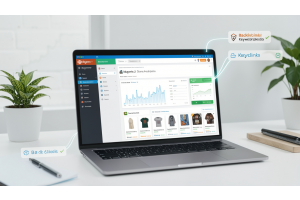
Analytics dashboards reveal how customers interact with your store, website, and app. You spot problems in real time and fix them before they cost you sales. Your team spends less time searching for information and more time solving customer problems.
Tip
To enhance your eCommerce store’s performance with Magento, focus on optimizing site speed by utilizing Emmo themes and extensions. These tools are designed for efficiency, ensuring your website loads quickly and provides a smooth user experience. Start leveraging Emmo's powerful solutions today to boost customer satisfaction and drive sales!
Organize Contacts That Actually Convert
Contact segmentation separates window shoppers from serious buyers. CRM software groups customers by behavior, purchase frequency, and total spending. You target high-value segments with premium offers while nurturing newer customers differently.
Advanced features include automatic lead scoring and contact tagging. The system ranks prospects based on engagement level and buying signals. Your sales team focuses energy on leads most likely to convert instead of chasing cold contacts.
Retail dominated the CRM market with a revenue share of 23.5% in 2022, driven largely by the need to manage growing customer databases from online and mobile channels.
| Customer Segment | Typical Retention Rate | Recommended Strategy |
|---|---|---|
| High-value repeat customers | 90–95% | Exclusive offers, early access |
| Regular customers | 70–80% | Loyalty programs, personalized recommendations |
| Occasional buyers | 40–50% | Re-engagement campaigns, incentives |
| New customers | 25–35% | Onboarding sequences, education content |
Keep More Customers Coming Back
93% of businesses report higher customer retention rates since implementing CRM solutions, with 44% witnessing increases of 10–29%. The system tracks behavior patterns over time, showing what keeps customers loyal.
You identify at-risk customers before they leave. The CRM flags accounts with declining engagement or reduced purchase frequency. Your team can intervene with targeted offers or outreach.
Retention matters more than most businesses realize. A 5% increase in customer retention results in profit increases of 25–95%, with 65% of company sales coming from returning customers. It costs seven times less to retain existing customers than acquire new ones.
Reporting dashboards show which strategies work for different customer groups. You replicate successful tactics across your entire customer base instead of guessing what drives loyalty.
Automate Communications That Actually Get Read
Modern CRM systems send the right message at the right time without manual intervention. After a purchase, customers receive order confirmations, shipping updates, and delivery notifications automatically. Post-sale surveys go out on schedule.
Businesses using generative AI in their CRM are 83% more likely to exceed sales goals. AI-powered features suggest personalized product recommendations based on browsing and purchase history. The system learns customer preferences and adjusts messaging accordingly.
You set up behavioral triggers that respond to customer actions. Someone abandons a cart? They get a reminder email. A customer hasn't purchased in 90 days? The system sends a win-back offer. These automated workflows free your team to handle complex issues that require human judgment.
Track Inventory Levels That Prevent Stockouts
CRM software integrated with inventory management prevents the costly problem of running out of popular items. The system monitors stock levels in real time across all locations and sales channels.
Automatic reordering triggers purchase orders when inventory hits preset thresholds. You get notifications before shortages become problems. Peak season demand doesn't catch you off guard.
Analytics tools reveal which products sell fastest in specific locations or seasons. You adjust supply chain operations based on actual data instead of hunches. This reduces both excess inventory costs and lost sales from stockouts.
The system tracks product performance across customer segments. You discover which items drive repeat purchases and which ones customers buy once then never return. This intelligence shapes purchasing decisions and marketing strategies.
Current CRM Market Data
| Metric | Value | Source |
|---|---|---|
| Global CRM Market Size (2024) | $101.4 Billion | Industry Reports |
| Projected Market Size (2032) | $262.74 Billion | Industry Reports |
| Annual Growth Rate (CAGR) | 12.6% | Industry Reports |
| Businesses Exceeding Sales Goals with CRM | 97% | Recent Studies |
| Average Customer Retention in Retail | 40–55% | Industry Benchmarks |
| Mobile CRM Users | 70% of Businesses | Current Research |
Businesses using CRM are 86% more likely to exceed their sales goals than those without CRM systems. The technology continues evolving with AI capabilities, mobile access, and deeper integrations becoming standard features rather than premium add-ons.
Conclusion
Pick CRM software that integrates with your existing systems. Look for platforms offering mobile access, automated workflows, and customizable reporting. Start with core features like contact management and sales tracking before adding advanced capabilities.Train your team thoroughly. 20-70% of CRM projects fail primarily due to poor user adoption. Success requires buy-in from everyone who touches customer data.CRM software delivers measurable results when implemented properly. The data shows clear benefits across customer service, retention, sales performance, and operational efficiency. Retail businesses that invest in CRM gain competitive advantages that compound over time.
FAQs
How does CRM improve customer retention in retail?
CRM systems track customer behavior, preferences, and purchase history, allowing retailers to deliver personalized experiences that increase loyalty and repeat purchases.
How does CRM help retailers personalize marketing campaigns?
By segmenting customers based on shopping patterns and demographics, CRM enables targeted email campaigns, promotions, and product recommendations that boost conversion rates.
How does CRM improve inventory management for retailers?
CRM integrated with inventory systems provides real-time stock visibility, prevents overstocking or stockouts, and ensures optimal product availability across all stores.
How does CRM enhance retail sales performance?
Sales teams gain insights into customer buying behavior, enabling better upselling, cross-selling, and follow-ups that directly increase revenue.
How does CRM improve customer service in retail businesses?
CRM centralizes customer interactions, making it easy for support teams to resolve issues quickly, offer personalized assistance, and maintain consistent service across channels.
What analytics benefits does CRM provide to retailers?
CRM analytics reveal sales trends, customer lifetime value, seasonal demand, and product performance, helping retailers make data-driven business decisions.
Can CRM improve omnichannel retail experiences?
Yes, CRM unifies data from online stores, physical shops, mobile apps, and social platforms, delivering a consistent and seamless customer experience.
How does CRM help increase customer lifetime value (CLV) in retail?
By enabling personalized recommendations, loyalty programs, and automated follow-ups, CRM encourages repeat buying and long-term brand relationships.
What cost-saving benefits does CRM offer to retailers?
CRM reduces marketing waste, prevents inventory losses, automates manual tasks, and improves customer service efficiency, leading to lower operational costs.
What is the long-term business impact of CRM in retail?
CRM supports sustainable growth by strengthening customer relationships, improving sales forecasting, enhancing brand loyalty, and driving consistent revenue growth.